Tray-based transfer
Move suitable bins, totes, components and kits.
Tray-based autonomous transfer
Keep parts moving. Keep people focused.
Product information and demonstrations,
scoped around your environment.
 AARYVYA / Tray-based autonomous transfer
01 / Product overview
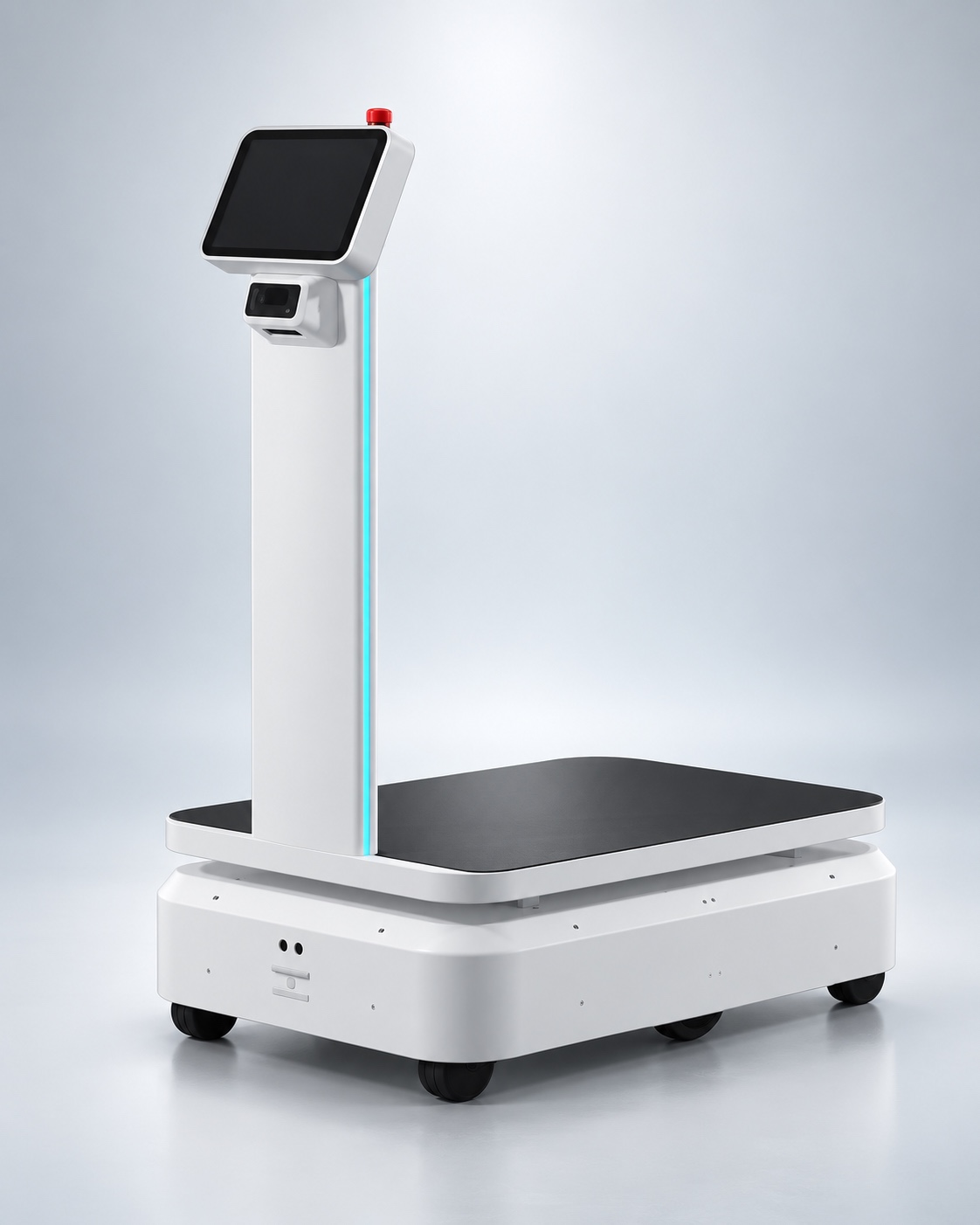
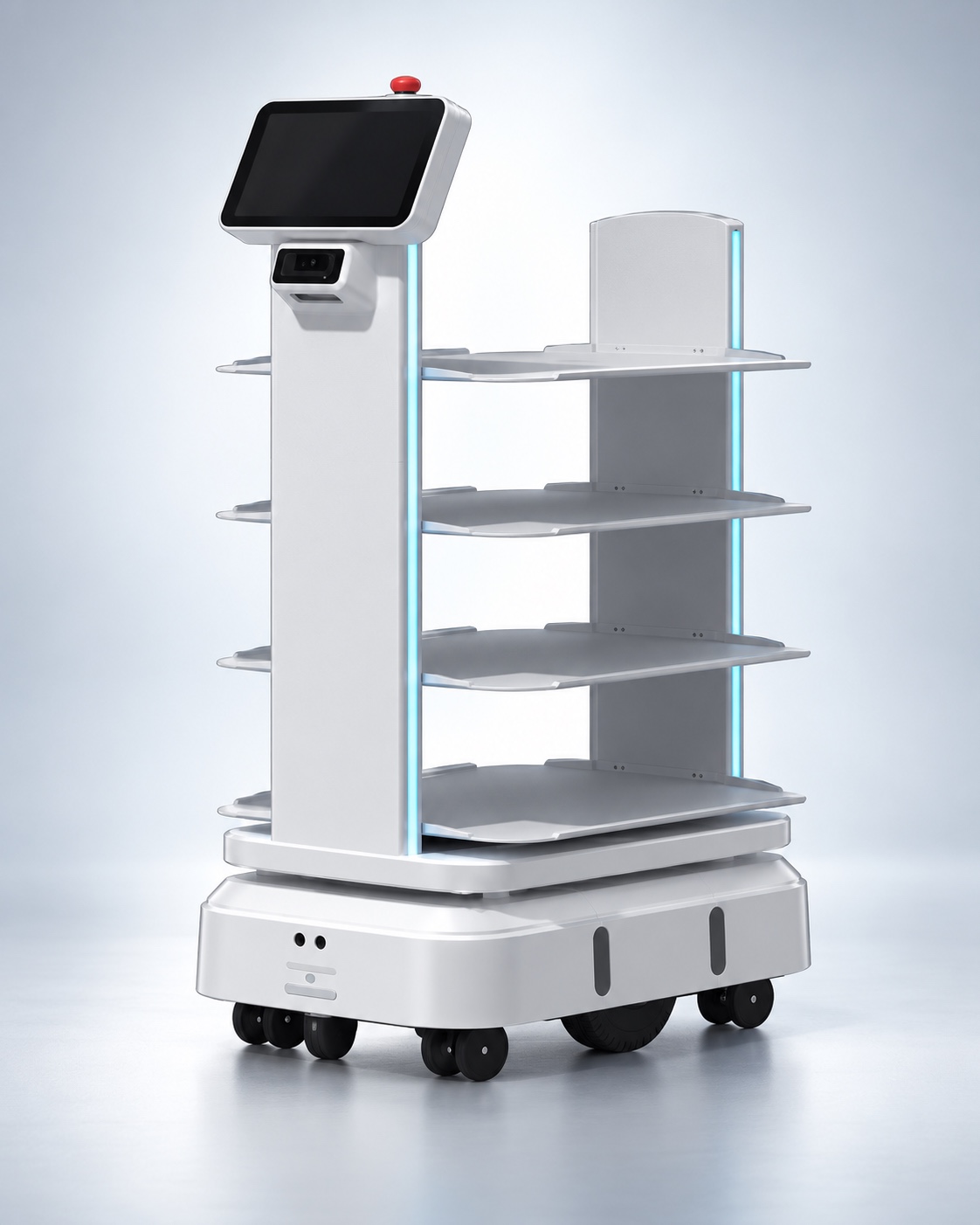
The D Series with Tray is designed for repeat indoor material movement between workstations, stores and dispatch points. A tray-based configuration suits bins, totes, parts and prepared kits.
The supplied transfer portfolio gives an 80–300 kg payload range and describes configurable workflows and point-to-point missions. Select the final configuration around the load format, pickup process and destination.
This is a practical starting point for a repeated transfer route. Map the handover at each end, assess aisle access and define how requests are created before expanding to more tasks or robots.
02 / Core capabilities
Move suitable bins, totes, components and kits.
Connect defined pickup and drop-off locations.
Align trays and missions with the operating process.
Coordinate compatible tasks through central assignment.
Payload range supplied in the transfer portfolio. Final capacity and load compatibility depend on the selected configuration.
03 / Where it fits
These contexts guide evaluation. The operating space, process and selected configuration determine the final deployment scope.
04 / Use scenarios
Move parts and kits from a preparation point to production.
Connect a parts store with defined workstations.
Create repeat movement between internal teams.
05 / Operational value
Shift suitable repeated transport tasks into a robot workflow.
Define the pickup and delivery process clearly.
Begin with one useful route and assess further expansion.
06 / System & ecosystem
RoboFleet connects compatible AMRs to call-button requests, barcode-triggered jobs and central task distribution. Define pickup and delivery points, load handling and task priorities together. Fleet coordination should follow the actual movement pattern of the facility, with compatibility and interface scope confirmed during planning.
Explore RoboFleetDeployment discussion
What recurring work or interaction should this system support? Define the outcome and who is responsible for it.
What space will it operate in? Review access, routes, surfaces and the people sharing the area.
Which confirmed functions and equipment are required? Review compatibility and any interfaces before setting scope.
What would a useful demonstration or pilot show? Select a representative task and agree how the team will assess it.
Continue exploring
A conversation is the first step
Request product information, discuss deployment or ask about a demonstration.